






Rybelsus 14 mg is now 9 mg: the new 1.5, 4 and 9 mg doses and their equivalents
Why Rybelsus 3, 7 and 14 mg became 1.5, 4 and 9 mg in Spain, what each one is equivalent to according to the AEMPS, which medication errors were feared and why your old prescription no longer works.
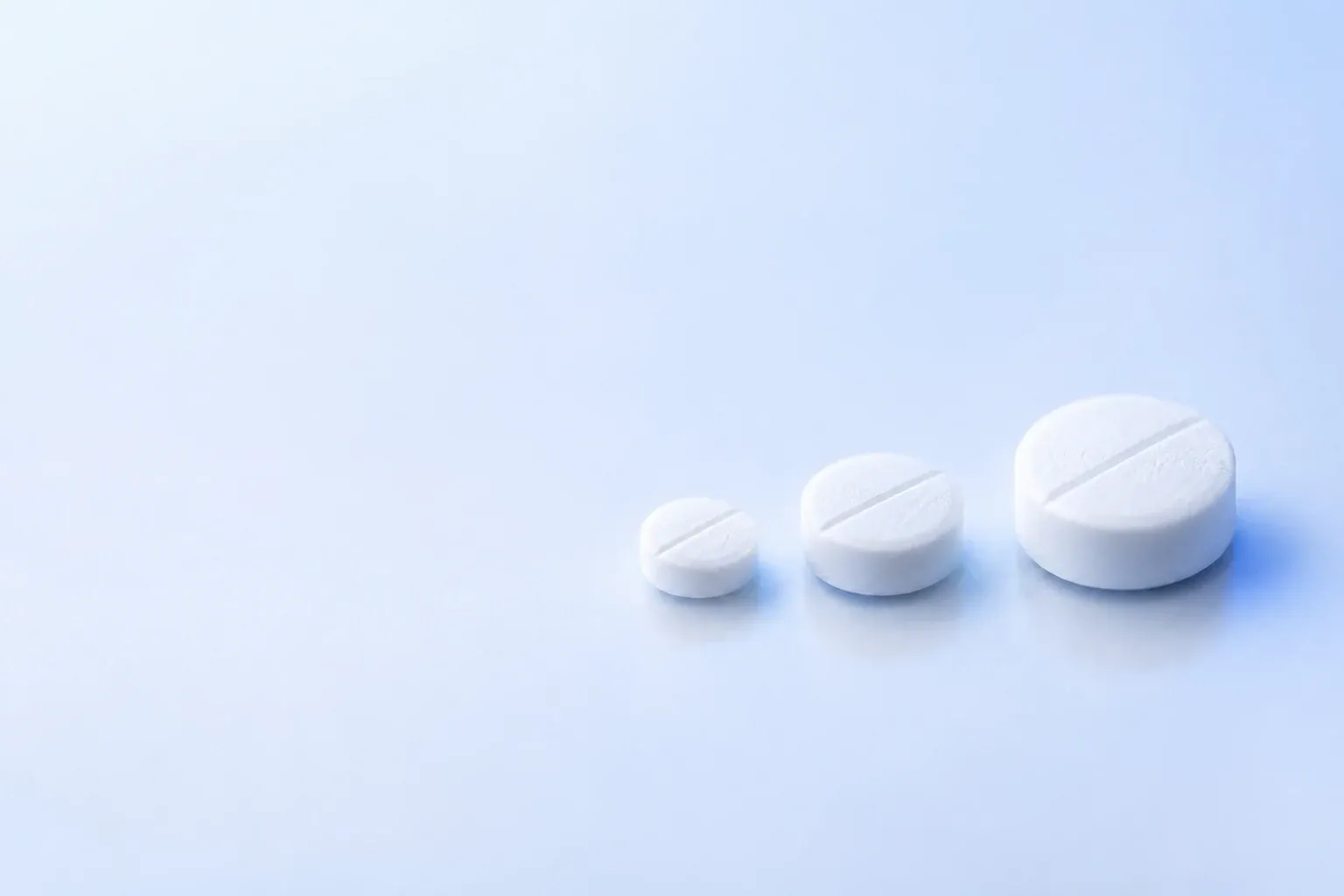
Short answer
Rybelsus 14 mg is no longer marketed in Spain: according to the AEMPS, its equivalent is Rybelsus 9 mg, just as 3 mg becomes 1.5 mg and 7 mg becomes 4 mg. It is the same semaglutide in a formulation that is absorbed better, which is why it gives the same effect with fewer milligrams. A prescription for the old strength is not valid for the new one: the switch is made by your doctor.
Key points
- According to the AEMPS notice of 12 February 2026, the two formulations were available side by side in Spanish pharmacies for around four months, with a risk of medication errors that can cause nausea, vomiting and diarrhoea.
- The SmPC estimates the oral bioavailability of semaglutide at around 1-2 %, and the new formulation uses excipients that increase it.
- As of 5 November 2026, CIMA lists the 1.5, 4 and 9 mg strengths as marketed and the 3, 7 and 14 mg strengths as no longer marketed.
- The Spanish Ministry of Health's Nomenclátor sets the price at €123.53 for a box of 30 tablets, whatever the dose.
Rybelsus: old strength and its new equivalent
Equivalents from the AEMPS notice of 12/02/2026 and table 10 of the SmPC: they are bioequivalent, but a prescription for the old strength is not valid for the new one and the switch is prescribed by your doctor.
| Old strength (oval tablet) | New equivalent (round tablet) | Use according to the SmPC | Status in CIMA as of 05/11/2026 |
|---|---|---|---|
| 3 mg | 1.5 mg | Starting dose | 3 mg no longer marketed · 1.5 mg marketed |
| 7 mg | 4 mg | Maintenance dose | 7 mg no longer marketed · 4 mg marketed |
| 14 mg | 9 mg | Maintenance dose | 14 mg no longer marketed · 9 mg marketed |
Rybelsus 14 mg is no longer marketed in Spain. According to the notice issued by the AEMPS (the Spanish Agency of Medicines and Medical Devices) on 12 February 2026, its equivalent is Rybelsus 9 mg. In the same way, 3 mg is now 1.5 mg and 7 mg is now 4 mg. It is the same semaglutide in a formulation that is absorbed better, so fewer milligrams give the same exposure and the same effect. A prescription for the old strength is not valid for the new one, and the switch is made by your doctor.
Rybelsus is Novo Nordisk's oral semaglutide. In Spain it is authorised for adults with inadequately controlled type 2 diabetes, to improve blood glucose control alongside diet and exercise. It is not authorised for obesity or weight loss. For that there is a separate oral semaglutide product, Wegovy tablets, with its own summary of product characteristics. What follows is regulatory information about the change in strengths, not dosing advice: any adjustment is decided by the prescriber.
Which new dose is equivalent to Rybelsus 14 mg?
The AEMPS notice and table 10 of the summary of product characteristics (SmPC, known in Spain as the ficha técnica) give the same equivalents for each strength:
- Rybelsus 3 mg, the starting dose, is equivalent to Rybelsus 1.5 mg.
- Rybelsus 7 mg, a maintenance dose, is equivalent to Rybelsus 4 mg.
- Rybelsus 14 mg, a maintenance dose, is equivalent to Rybelsus 9 mg.
The SmPC puts it simply: a round 9 mg tablet has the same effect as an oval 14 mg tablet. They are bioequivalent, which in regulatory language means they produce the same exposure to the active substance in the body. The number on the box goes down, but the effective dose stays the same. Someone who was taking 14 mg is not taking less by switching to 9 mg.
To tell them apart at a glance, the AEMPS explains that the new tablet is round rather than oval and is engraved with the dose. The colour of the packaging for each dose level has been kept similar to before, and that similarity is precisely one of the sources of confusion.
As of 5 November 2026, CIMA, the AEMPS medicines database, lists the 1.5, 4 and 9 mg strengths as marketed, all in boxes of 30 tablets, and the old 3, 7 and 14 mg strengths as no longer marketed. The SmPC also includes maintenance doses of 25 and 50 mg, but CIMA does not list any product in those strengths.
Why has Rybelsus changed its milligrams if the effect is the same?
It comes down to bioavailability, meaning the share of the medicine that actually reaches the bloodstream. Semaglutide is poorly absorbed from the stomach: according to the SmPC, its estimated oral bioavailability is only around 1-2 %, and it varies widely from person to person. That is why the tablet contains salcaprozate sodium, an excipient that helps absorption, which happens mainly in the stomach.
Novo Nordisk developed a formulation with excipients that increase this absorption. If a larger proportion of the active substance gets in, fewer milligrams are needed to reach the same blood concentration, which is why 14 mg has become 9 mg. According to the AEMPS, the EMA (European Medicines Agency) gave the change a favourable assessment after it was demonstrated in a clinical trial, and the new strengths have the same efficacy, the same safety profile and are taken in the same way.
This means the existing data still apply. The SmPC states that the PIONEER trials, on which the authorisation is based, were carried out with 3, 7 and 14 mg, which are bioequivalent to 1.5, 4 and 9 mg. What is known about efficacy and side effects applies to both formulations.
What risk of medication error did the AEMPS flag?
The AEMPS warned that both formulations would be available side by side in Spanish pharmacies for around four months, and that this overlap could cause confusion and errors. The specific risk it names is higher exposure to semaglutide, with gastrointestinal adverse effects such as nausea, vomiting and diarrhoea.
The reason becomes clear once you look at the table. Because the new numbers are lower, it is easy to read them as smaller doses: 9 mg looks as if it sits between the old 7 and 14, when in fact it is equivalent to 14. Mixing old and new boxes, or reading the number without the table, can lead to taking more medicine than intended. On top of this, the SmPC is categorical on one point: Rybelsus is always taken as a single tablet a day, and you must not take more than one to get the effect of a higher dose.
According to the SmPC, nausea and diarrhoea are already the most common side effects of Rybelsus, affecting at least one in ten patients in the trials, and a dosing error makes them more likely. We explain how these symptoms are managed in the digestive side effects of semaglutide and how to manage them. The AEMPS also reminds patients that any side effect can be reported through the Spanish NotificaRAM portal.
To reduce the risk, the SmPC and the package leaflet were updated with the table of equivalents, and the notice asked healthcare professionals to make sure patients understand the change, both when prescribing and when dispensing.
Can a prescription for Rybelsus 14 mg be used for 9 mg?
No. The AEMPS states this explicitly: although the strengths are bioequivalent, a prescription for the old strengths is not valid for the new ones. The pharmacy dispenses the medicine written on the prescription, and a prescription for 14 mg is not a prescription for 9 mg. That is why the notice asked healthcare professionals to gradually update prescriptions to the new strengths, and for every new treatment to be started on the new formulation.
For people already taking it, the notice advised carrying on as normal until they had used up the medicine they had at home and, when renewing, getting a prescription for the new strength from their healthcare professional. In the Spanish public health system, BIFIMED (the Ministry of Health's funding database) lists the new strengths as funded subject to prior authorisation (visado) from 1 February 2026, only for type 2 diabetes with a BMI of 30 or more and in combination with other antidiabetic drugs.
The price does not change with the dose: the Spanish Ministry of Health's Nomenclátor lists €123.53 for a box of 30 tablets, whether 1.5, 4 or 9 mg, the same as the old strengths cost. The monthly breakdown is in the price of Rybelsus in Spain.
Who decides on the switch, and what should you not do on your own?
The switch is made by your doctor. The table of equivalents helps you understand which new strength corresponds to the old one and check that your prescription and your box match. It is not for changing your dose on your own initiative. Whether the dose goes up, down or stays the same depends on how well your blood glucose is controlled, how you tolerate the medicine and what else you are taking, and that is for the prescriber to assess.
The SmPC describes treatment starting on 1.5 mg for one month and then moving to 4 mg as a maintenance dose, with a higher step only considered after at least one month on the current dose and if needed. It also notes that the risk of hypoglycaemia increases when it is taken with sulphonylureas or insulin, in which case adjusting those other medicines may be considered. These are clinical decisions that a table cannot settle.
If the box you collect does not match what you were taking, or you have questions about the equivalence, the AEMPS notice directs you to your healthcare professional. And if you want background on injectable semaglutide, the once-weekly version, we cover it in our guide to Ozempic in Spain.
Rybelsus is authorised in Spain for type 2 diabetes. If you are looking for an oral treatment for weight, take a look at our guide to prescription weight-loss pills.
Key takeaways
Rybelsus 14 mg is now Rybelsus 9 mg: the same effect with fewer milligrams thanks to a formulation that is absorbed better, a new prescription needed to have it dispensed, and the decision always in your doctor's hands. It is also a medicine for type 2 diabetes, not for weight loss. If what you want is to lose weight with medical support, what is available in Spain today is medical weight-loss treatment with a prior assessment, a prescription where appropriate from a registered doctor, and ongoing follow-up. You can:
Sources
- AEMPS, «La AEMPS informa del cambio de dosificación de Rybelsus (semaglutida) y los posibles errores de medicación» (12/02/2026)
- CIMA AEMPS, ficha técnica de Rybelsus 1,5 mg
- CIMA AEMPS, Rybelsus 9 mg comprimidos
- Nomenclátor, Ministerio de Sanidad: Rybelsus
- BIFIMED, Ministerio de Sanidad: Rybelsus 9 mg (CN 767473)
It's time to reach your goal.
Online medical assessment, prescription when appropriate and 1:1 follow-up with this team.
Frequently asked questions
- Has Rybelsus 14 mg been discontinued?
Yes: CIMA lists Rybelsus 14 mg as no longer marketed in Spain, and it has been replaced by Rybelsus 9 mg. This is not a lower dose but a new formulation that is absorbed better and gives the same effect with fewer milligrams. You need a new prescription to switch from one to the other.
- How much weight do you lose on Rybelsus 14 mg?
In the PIONEER 1 trial, in people with type 2 diabetes, weight fell by an average of 3.7 kg over 26 weeks on 14 mg, compared with 1.4 kg on placebo, from a starting weight of around 88 kg. This is a secondary result from a diabetes trial: Rybelsus is not authorised for weight loss.
- Can I take two Rybelsus 4 mg tablets instead of one 9 mg tablet?
No. The SmPC states that Rybelsus is always taken as a single tablet a day and that you must not take more than one to get the effect of a higher dose. Any change of dose is prescribed by your doctor.
- Can I take Rybelsus to lose weight if I don't have diabetes?
In Spain, Rybelsus is authorised only for type 2 diabetes and is not authorised for weight management. The oral semaglutide authorised for weight loss is Wegovy tablets, which has its own BMI criteria in its SmPC, and whether it suits you is for a doctor to assess.
- What are the side effects of Rybelsus?
According to the SmPC, the most common are digestive: nausea and diarrhoea, in at least one in ten patients, and vomiting. With insulin or sulphonylureas, hypoglycaemia is also very common. A dosing error during the switch in formulation makes digestive symptoms more likely.
Keep reading
Oral semaglutide and levothyroxine: taking Wegovy tablets with Eutirox, metformin and alcohol
What the Spanish summary of product characteristics for Wegovy tablets says about levothyroxine, metformin, anticoagulants and other morning medicines. It also covers why the half-hour wait and taking the tablet on its own matter, what is known about alcohol, and what happens in pregnancy and breastfeeding.
ReadTreatments and medicinesSwitching from Wegovy injections to tablets: what the product information says and who decides
The summary of product characteristics describes only one switch: from the 2.4 mg pen to the 25 mg tablet, one week after the last injection. This piece covers switching from other doses, from Ozempic or from Mounjaro, what you gain and lose, and what each form costs in Spain.
ReadTreatments and medicinesIs there a Mounjaro pill? What's available in Spain and what's happening with Lilly's pill
Tirzepatide doesn't come as a tablet. Mounjaro is only sold as an injection. Lilly's pill is a different molecule, orforglipron (Foundayo), and it's still waiting for a decision from the European Commission. We explain what still has to happen before it reaches Spain, what its trial found and which tablets you can get in Spain today.
Read